
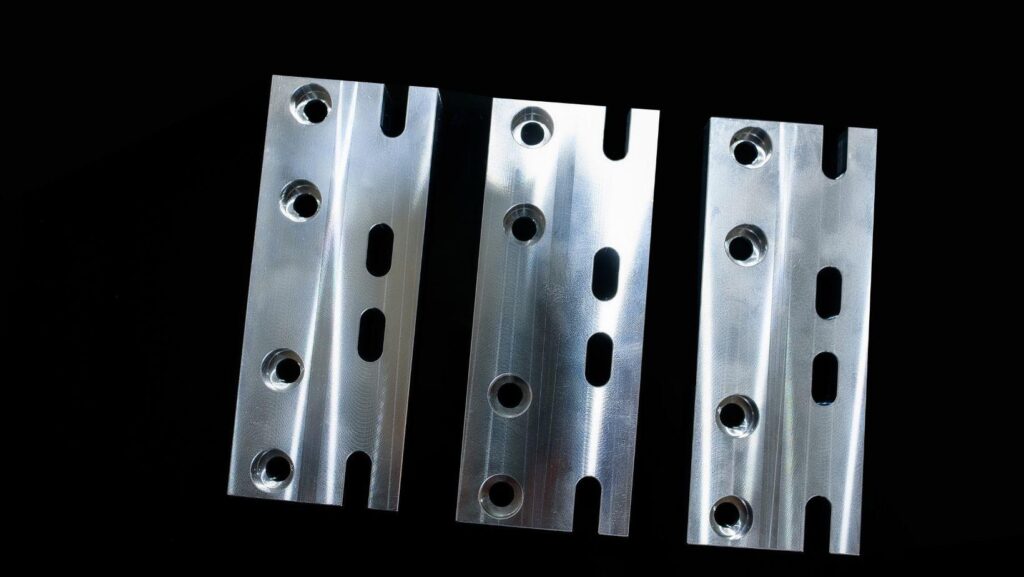
Choosing the right material can determine whether a custom part performs reliably, can be manufactured efficiently, and remains practical as a design moves from prototype to production. Aluminum has become a widely used option because it combines relatively low weight with useful strength, corrosion resistance, thermal conductivity, and good manufacturability. These characteristics make it suitable for everything from small prototype components and electronic enclosures to automotive brackets and industrial assemblies. Its versatility also comes from the range of available alloys, each offering different combinations of strength, formability, corrosion resistance, and machinability. For engineers and product designers, that flexibility makes aluminum particularly valuable when a component needs to be customized without sacrificing practical performance.
Lightweight Strength for Custom Components
One of aluminum’s most important advantages is its strength-to-weight relationship. A component does not necessarily need to be made from a heavier material simply because it must withstand mechanical loads. Depending on the alloy and design, aluminum can provide useful structural performance while keeping the overall assembly lighter. This is especially important in applications where reducing mass can simplify handling, transportation, or installation.
The choice of alloy matters considerably. For example, 6061 is a versatile aluminum alloy commonly used for general-purpose fabrication, while 6061-T6 is heat-treated to increase hardness and strength. More specialized alloys such as 7075 can provide a higher strength-to-weight ratio and are often considered when demanding mechanical performance is a priority. Conversely, 5052 is particularly useful where forming ability and corrosion resistance are important.
This range gives designers room to match the material to the actual requirements of a component rather than treating aluminum as a single, uniform material. In custom manufacturing, that distinction can make the difference between a part that merely works and one that is properly suited to its operating environment.
Efficient Fabrication and Prototype Development
Aluminum is also well suited to fabrication processes used for custom production and prototyping. Sheet aluminum can be cut, bent, formed, machined, and joined into many different geometries. This allows designers to develop physical prototypes that closely represent the intended production component instead of relying solely on simplified mock-ups.
For prototype development, manufacturability is particularly important. A prototype should not only demonstrate how a component looks; it should also help reveal problems involving fit, assembly, clearances, access, strength, and fabrication. Using aluminum parts during this stage can provide a realistic assessment of these factors while keeping the material compatible with common fabrication techniques.
Aluminum’s workability also benefits short production runs. When quantities are too small to justify highly specialized tooling, sheet-metal fabrication and other conventional processes can provide practical ways to create customized components. Waterjet and laser cutting, bending, machining, and secondary operations can all play a role depending on the design. Rapid Axis, for example, identifies aluminum’s formability, machinability, and suitability for intricate sheet-metal builds as important aspects of its fabrication capabilities.
Corrosion Resistance and Functional Performance
Another reason designers frequently consider aluminum is its natural resistance to corrosion. Aluminum develops a thin oxide layer on its surface that helps protect the underlying metal. The level of corrosion resistance still depends on the alloy, environment, surface condition, and exposure, so material selection should always reflect the actual operating conditions.
For harsh or demanding environments, alloy selection can be especially important. Rapid Axis notes that 5052 aluminum offers strong corrosion resistance and good formability, making it useful for industrial and maritime applications. Other alloys may provide greater strength but require additional attention to surface protection.
Surface treatments can further alter the performance and appearance of a finished component. Anodizing can create a harder, corrosion-resistant surface, while powder coating provides a durable exterior layer. Chemical conversion coatings can also improve corrosion resistance while, in appropriate applications, maintaining aluminum’s electrical conductivity. These options allow the same basic material family to serve both functional and aesthetic requirements.
Thermal and Electrical Advantages
Material selection becomes even more important when a component must manage heat or interact with electrical systems. Aluminum has good thermal conductivity, which is why it appears in applications where heat needs to move away from a component or enclosure. Electronic housings, heat sinks, panels, and other thermal-management components can benefit from this property.
Its electrical conductivity is another useful characteristic. Although aluminum is not automatically the best choice for every electrical application, its conductivity can make it appropriate for certain enclosures, panels, connectors, and related components. Surface treatments must be selected carefully, however, because coatings can change the electrical characteristics of the finished surface.
For prototype work, these properties can help engineers evaluate thermal behavior and component integration before committing to larger production quantities. A prototype made from a material with similar functional characteristics to the intended production part can provide more meaningful testing results than a visually similar but materially different substitute.
Choosing the Right Alloy for the Application
There is no universal aluminum alloy that is ideal for every custom component. Designers should consider mechanical loading, forming requirements, corrosion exposure, finishing needs, machining requirements, and expected service conditions before selecting a specific grade.
Common considerations include:
- 6061: A versatile choice for general-purpose applications, with 6061-T6 offering increased strength through heat treatment.
- 5052: Particularly useful when formability, corrosion resistance, and fatigue performance are important.
- 3003: Often selected for applications where ease of fabrication, corrosion resistance, and cost-effectiveness matter more than high structural strength.
- 7075: A higher-strength option frequently considered for demanding aerospace, defense, and industrial components.
The appropriate alloy therefore depends on what the part must accomplish rather than simply its appearance or availability. Designers should also account for how the chosen alloy behaves during bending, welding, machining, and finishing. A material that performs exceptionally well mechanically may be less convenient for a highly formed component, while a highly formable alloy may not provide enough strength for a load-bearing application.
Design Considerations for Reliable Custom aluminum components
Although aluminum offers many advantages, successful fabrication still depends on good engineering decisions. Thermal expansion is one consideration that should not be overlooked. Aluminum expands as temperature increases, so components exposed to significant temperature changes may require appropriate allowances, tolerances, or engineering analysis.
Dimensional requirements should also be realistic for the selected fabrication process. Extremely tight tolerances can increase manufacturing complexity and may require additional machining or specialized processes. Designers can often improve efficiency by specifying tolerances according to the actual functional requirements rather than applying unnecessarily strict limits to every dimension.
Geometry matters as well. Bend locations, hole placement, material thickness, corner details, and joining methods should be considered during the design stage. Designing with fabrication processes in mind can reduce unnecessary operations and help prevent problems when a prototype transitions into repeat production.
End Note
Aluminum remains a strong candidate for custom manufacturing because it brings several useful properties together in one material family. Its low weight, strength potential, corrosion resistance, thermal and electrical characteristics, and compatibility with fabrication processes make it useful across automotive, aerospace, electronics, consumer products, and industrial equipment.
The greatest benefit, however, comes from selecting the right alloy and designing the component around its intended function. When engineers consider material properties, manufacturing methods, tolerances, environmental exposure, and finishing requirements from the beginning, aluminum can support an efficient path from early prototype to dependable custom production.